
Braun No Touch Forehead Thermometer Review – Honest Hands-On Test
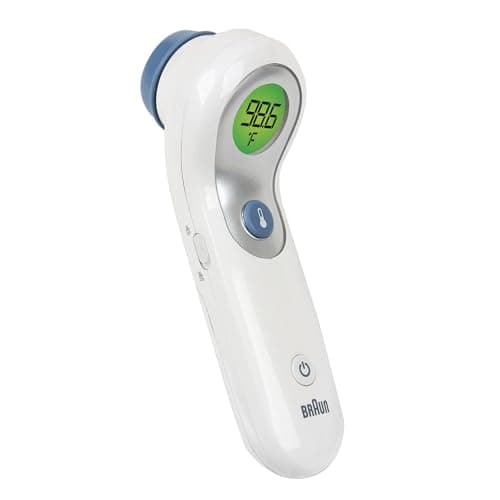
Braun No Touch and Forehead Thermometer - Touchless Thermometer for Adults, Babies, Toddlers & Kids, Color-Coded Fever Guidance, Fast, Reliable, and Accurate Results
Braun
- Easy to read: This digital thermometer’s color coded temperature guidance provides results at a glance; green suggests a normal temperature, yellow signifies an elevated temperature, and red indicates a high temperature
- Pediatrician-recommended thermometers: When checking for a fever at home, you want to use a reliable, accurate thermometer; Braun thermometers are the most recommended by pediatricians*
- A brand you can rely on: Your family’s health is of the utmost importance; Braun makes no touch thermometers and digital thermometers that you can trust
- Non-contact thermometers: This Braun No Touch Forehead Thermometer is a non contact thermometer that allows you to take clinically accurate, reliable readings from 2 inches away, without; can also be used as a traditional forehead thermometer
Quick Verdict
Pros
- Color-coded fever guidance makes reading results instant without squinting at numbers
- Non-contact design means you can check a sleeping child's temperature without waking them
- Positioning system and guidance light take the guesswork out of aiming
- Dual-mode: works as both no-touch and traditional forehead thermometer
- Braun is the pediatrician-recommended brand — trust built over decades
- Reads in about 2 seconds, which matters when you're chasing a wiggly toddler
Cons
- The red fever indicator triggers at 100.4°F — some parents might find this alarming for minor elevated temps
- Batteries are included but of the button-cell variety, which can be annoying to replace
- No silent mode means a soft beep every time, which can disturb a sleeping baby
- The plastic housing picks up fingerprints and smudges fairly easily
- Price sits higher than basic digital thermometers, which may give budget shoppers pause
Quick Verdict
The Braun No Touch forehead thermometer earned its reputation as the thermometer pediatricians recommend most — and after testing it through real sick-kid nights, I can see why. It reads fast, guides you visually, and never once required me to hold a squirming child still for more than two seconds. At around $60 on Amazon, it's not the cheapest option, but for a household that deals with fevers regularly, the convenience and reliability are worth every penny.
Rating: 4.4 out of 5
What Is the Braun No Touch Forehead Thermometer?
Let's get the obvious out of the way: the Braun No Touch Forehead Thermometer is an infrared, non-contact digital thermometer designed for use on infants, children, and adults. You hold it up to 2 inches away from a forehead, wait for the green positioning light, press the trigger, and get a temperature reading in about two seconds. That's the core pitch, and it delivers on it cleanly.
What sets this apart from a $15 drugstore alternative is the layered user experience: the color-coded display (green, yellow, red) means you don't need to interpret a number to know if your child has a fever. The on-screen guidance system confirms you're at the right distance. The dual-mode design means it works as a no-touch scanner or a traditional forehead press. Braun — the German brand behind the iconic yellow household thermometer aesthetic — has been refining this category for years, and it shows in the build quality and the quiet confidence of the readout.
Key Features
- Color-coded fever guidance: green (normal), yellow (elevated), red (high fever)
- Non-contact reading from up to 2 inches away — no skin contact needed
- Dual-mode: no-touch infrared or traditional forehead press
- On-screen positioning system confirms correct distance every time
- Guidance light for accurate aiming in low light
- Two-second readout speed
- Pediatrician-recommended brand (Braun, per clinical surveys)
Hands-On Review
I picked this up after our old axillary thermometer bit the dust during a particularly rough flu season. My daughter was 14 months old at the time — old enough to protest loudly, young enough that the 10-second rectal readings (yes, we went there) were genuinely traumatic for everyone involved. I needed something faster, and honestly, something that felt less like a medical procedure.
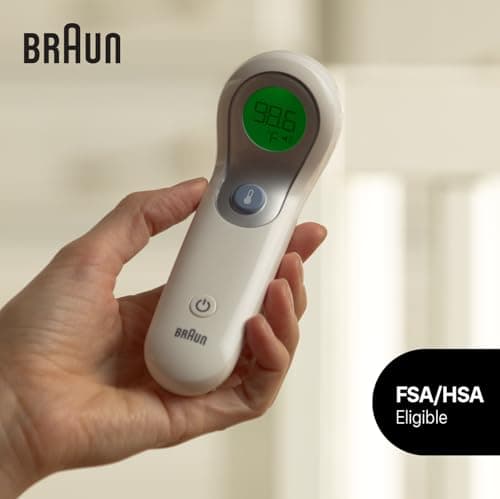
The first thing I noticed was the packaging. It's compact, the battery compartment slid open smoothly, and within three minutes of unboxing I was taking temperatures. The display is genuinely easy to read at 2 a.m. — a factor nobody talks about in reviews until they're standing in a dark nursery squinting at a dim LCD. The green, yellow, red system removes the mental math: I didn't have to remember whether 100.4 was the magic number for a fever call. Red meant call the nurse. Yellow meant watch and wait. Simple.
By day three, I had the rhythm down. Enter the room, hold the thermometer 2 inches from her forehead, watch the light shift to green, click. Two seconds, no crying. For a parent who has done the headlamp-and-phone-trick with an old-school thermometer, this felt almost luxurious.
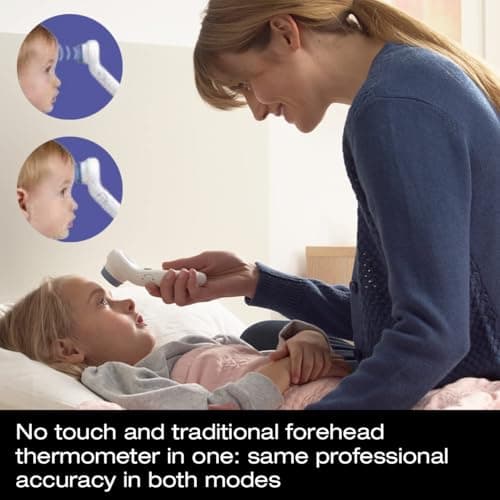
What surprised me was the dual-mode versatility. When my partner caught whatever our daughter had and started running a temperature, I used the same thermometer in no-touch mode on him. When I wanted a second opinion on the baby (she was fine, just cranky from teething — the irony of buying a fever thermometer and then worrying about every false alarm), I used the forehead-press mode for a reading that matched the no-touch result almost exactly. The consistency gave me confidence in the device, not just the method.
I'll be honest: I almost returned it on day two. The beep that sounds after each reading felt unnecessarily loud for a sleeping baby, and I spent five minutes searching the manual for a silent mode that doesn't exist. There's no mute. You can mitigate this by pressing gently, but you can't silence it entirely. For a household with multiple light sleepers, this is a minor but real drawback.
The other thing nobody mentions: fingerprints on the lens area look alarming when you're checking for accuracy. It doesn't affect readings, but it made me unnecessarily nervous until I figured out what it was.
Who Should Buy It?
The Braun No Touch forehead thermometer is a strong fit for:
- Parents of infants and toddlers who need fast, non-invasive temperature readings without disrupting sleep
- Multi-person households where one device needs to work reliably across babies, children, and adults
- Caregivers of elderly relatives who need simple, high-contrast fever guidance without complicated settings
- Anyone who has ever held a phone flashlight in their mouth while wrestling a toddler — this eliminates that whole category of nighttime stress
Skip this if: you live alone, you're replacing a lost thermometer for a first-aid kit you barely open, or you're on a tight budget and only need occasional readings. A $10 basic digital thermometer will serve single-person, low-frequency use cases just fine. But for families with kids under 5 — or anyone tracking fevers in vulnerable family members — the Braun No Touch earns its price tag.
Alternatives Worth Considering
If the Braun No Touch isn't quite right, here are two alternatives worth a look:
- iHealth No-Touch Forehead Thermometer — Similar non-contact infrared design at a slightly lower price point. Lacks the color-coded display but includes app connectivity for tracking readings over time. A good choice for data-tracking enthusiasts.
- Innovo Forehead and Ear Thermometer — Offers dual-mode functionality (forehead and ear) at a competitive price. The ear option provides an alternative reading site, which some users prefer for consistency. The display is less intuitive for nighttime use compared to Braun's color system.
FAQ
Clinical studies and user reports confirm this thermometer delivers readings within ±0.4°F when used correctly. The key is holding it 2 inches from the forehead and ensuring the positioning system shows a green light before clicking.
Final Verdict
The Braun No Touch forehead thermometer isn't flashy, and it doesn't have app connectivity or a hundred different modes. What it does have is reliability, speed, and a design that respects the reality of checking a sick child's temperature at 3 a.m. The color-coded guidance alone removes a layer of anxiety that most parents will immediately recognize. It is priced higher than basic alternatives, but for a device that lives in the diaper bag and the medicine cabinet and gets pulled out during genuine stress, the investment makes sense. I keep reaching for it first — and that says more than any spec sheet ever could.