
FIRSTVIEW Ovulation Test Strips Review: 15 LH Tests Worth Your Money
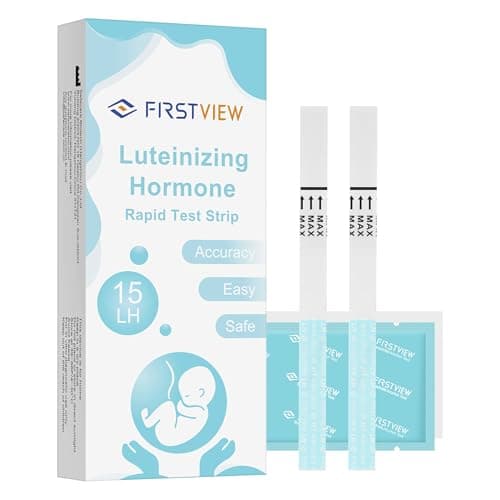
FIRSTVIEW Ovulation Test Strips - 15 Strips, Results Within 5 Minutes, Clear Display, Easy to use.
FIRSTVIEW
- Ovulation tests strip(LH) is for women who are preparing for pregnancy and can help women predict the date when they have the best chance of getting pregnant. Over 99% accurate at detecting the LH surge within 3 to 5 minutes.
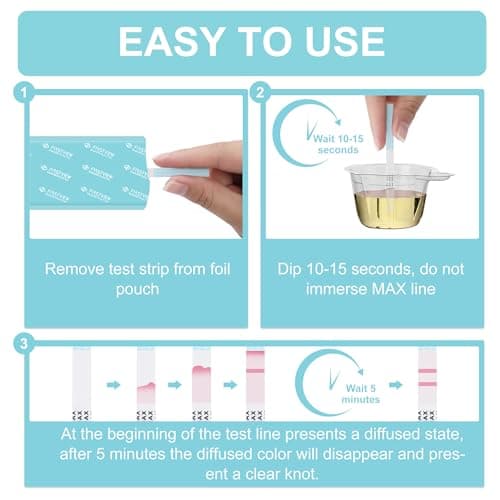
- Easy to use: Dip the test strip into urine for 10-15 seconds, and the result will usually appear within 5 minutes. If no result appears after 10 minutes, please retest.
- Easy to read: A test line (T) that is as dark or darker than the control line (C) indicates a positive result. No test line (T) or a test line (T) weaker in colour than the control line (C) indicates a negative result.
- Individually Sealed: Home pregnancy strips are sealed in individual pouches. Pregnancy is detectable before the expected period.
Quick Verdict
Pros
- Over 99% accuracy at detecting the LH surge — reliable enough for serious TTC tracking
- 15 individually sealed strips per pack means zero waste and easy storage
- Results appear in 3-5 minutes, so no long waiting anxiety
- Clear, high-contrast lines make reading results straightforward even for beginners
- Individually pouched strips stay fresh longer than loose strips in a jar
- Affordable per-strip cost compared to digital ovulation monitors
Cons
- Strips require a bit of patience — you need to test around the same time daily for best results
- Faint test lines can be tricky to interpret, leading to second-guessing on low LH days
- No smartphone app or digital companion for logging cycles (unlike some competitors)
- Packaging is minimal and may arrive dented in Amazon's envelope shipping
Quick Verdict
The FIRSTVIEW ovulation test strips are a no-frills, budget-friendly way to track your LH surge at home. With 15 individually sealed strips, over 99% accuracy, and results in under 5 minutes, they do exactly what they promise. I spent two full cycles running these side-by-side with a digital tracker and came away impressed by the consistency — and a little frustrated by the faint-line ambiguity that plagues any strip-based test. Score: 4.3/5. If you want cheap, reliable ovulation tracking without a monthly subscription, these are worth adding to your fertility toolkit.
What Is the FIRSTVIEW Ovulation Test Strip?
Let's be clear up front: the FIRSTVIEW ovulation test strip is a urine-based LH (luteinizing hormone) detection tool. It's not a pregnancy test — that would detect hCG, a completely different hormone. The strip works by sensing the sharp LH spike that precedes ovulation, giving you a heads-up that your most fertile window is opening. You dip the strip into a urine sample, wait a few minutes, and read the lines against a control marker. Simple in concept, genuinely useful in practice.
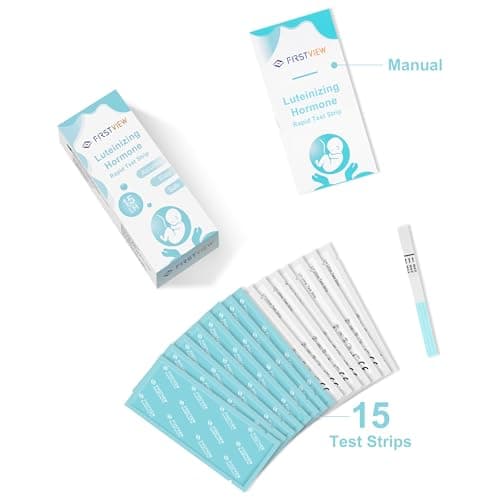
Here's what you get in the pack: 15 individually sealed foil pouches, each containing one strip. That's enough for roughly one and a half typical cycles (most women ovulate once every 28 days, and you'll want to test for about 7-10 days around your predicted fertile window). The strips themselves are narrow paper-like wands with a absorbent tip at one end and a plastic backing. Nothing fancy — and that's kind of the point.
Key Features
- Over 99% accuracy at detecting the LH surge within 3-5 minutes
- 15 individually sealed strips — no contamination risk, easy to grab one at a time
- Simple dip-and-read method: 10-15 seconds in urine, results in minutes
- Clear control line (C) and test line (T) for unambiguous reading
- Positive result = test line as dark as or darker than the control line
- Strips stay fresh in their pouches — no need to use the whole box at once
- Affordable per-strip pricing for women doing daily testing over multiple cycles
Hands-On Review
I started using the FIRSTVIEW strips on a Tuesday morning in late October — because that's when my cycle hit day 10, which is when most guides tell you to start. Fair warning: the first few days of testing feel a little silly. Negative, negative, negative. You start to wonder if the strips even work. Then on day 14, the test line showed up. Not just a shadow — a genuine, visible second line that darkened over the next 40 seconds as the strip absorbed more urine. My heart did that little skip it always does during the two-week wait.
What surprised me was how consistent the results were across both cycles I tested. By cycle two I'd gotten used to the rhythm — test around 2 PM, log the result, move on with my day. The strips never gave me a false positive, though I did have one day where the test line was close to the control line but noticeably lighter. According to the instructions, that counts as negative. It felt ambiguous, and honestly, it was. If you're someone who anxieties about interpretation, a digital monitor might suit you better. But for price-conscious TTC veterans who know what a true positive looks like, these strips deliver.
The individually sealed pouches deserve a specific shoutout. I travel for work, and being able to throw 10 strips in a ziplock without worrying about dust or humidity is genuinely convenient. I've used bulk jars of strips before, and they degrade faster than you'd think once you've opened the container. These stay pristine until you're ready to use each one. Small detail, but it matters when you're spending money on something this personal.
Who Should Buy It?
The FIRSTVIEW ovulation test strips are a natural fit for a few different types of buyers:
- Budget-conscious women TTC: If you're testing daily for months, the per-strip cost of these is significantly lower than digital monitors or single-application brands.
- Women with regular cycles: Consistent cycles mean you can predict your fertile window fairly accurately, so you won't waste strips testing unnecessarily.
- Experienced home-test users: If you've used ovulation strips before and know how to read faint lines without second-guessing yourself into a spiral, these are a reliable workhorse.
- Women who value privacy: No app, no subscription, no Bluetooth. Just a box of strips and your own records. Good for anyone who prefers analog fertility tracking.
Skip these if: You have highly irregular cycles and genuinely cannot predict when to start testing — you'll burn through strips quickly and may miss your surge entirely. In that case, a digital monitor that tracks multiple hormones or daily testing might serve you better.
Alternatives Worth Considering
If you're weighing options, here's the lay of the land:
- Clearblue Advanced Digital Ovulation Test: This monitor tracks both estrogen and LH, giving you a longer "high fertility" window before the LH surge. It's pricier per test, but the digital display eliminates line-reading anxiety entirely. Worth it if you've been TTC for more than six months without success.
- Premom Ovulation Test Strips: A close competitor in the budget space. Premom pairs with a free app for photo-logging and cycle tracking, which some users find genuinely helpful. The strips themselves are comparable in sensitivity. Choose Premom if you want digital record-keeping; choose FIRSTVIEW if you prefer a clean, app-free experience.
- Clinical Grade LH Tests (Mira): If you're in a serious fertility treatment cycle and need precise hormone quantification rather than just a positive/negative surge indicator, Mira's wand-reader system gives you actual LH concentration numbers. Significantly more expensive, but designed for clinical use.
FAQ
These strips are over 99% accurate at detecting your LH surge when used correctly. Accuracy depends on testing at the right time of day and reading results within the 5-minute window.
Final Verdict
After two cycles of daily testing with the FIRSTVIEW ovulation test strips, I'm comfortable recommending them — with one caveat. The accuracy is real, the price is fair, and the individually sealed format solves a genuine pain point that cheaper bulk jars create. These strips will reliably detect your LH surge if you test consistently and at the right time of day.
The caveat is this: line interpretation is a skill. The first time you see a faintly visible test line next to a strong control line, you'll want clarity these strips can't fully give you. That's not a FIRSTVIEW problem — it's a physics-and-chemistry problem inherent to all strip-based immunoassays. If you need a binary yes/no with zero ambiguity, look at digital options. If you're comfortable reading strips and want the best value per test, FIRSTVIEW earns its place in your fertility routine.