
Mira Fertility Monitor Review: Honest Hands-On Verdict
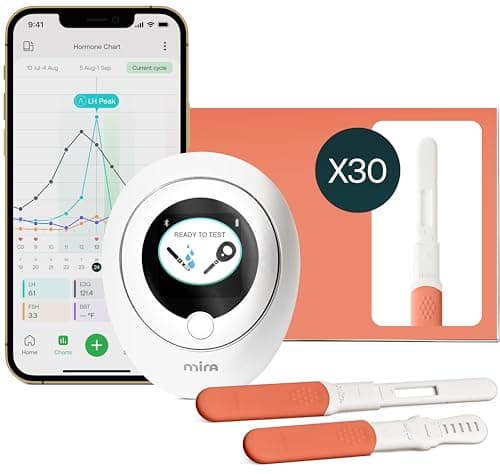
Mira Fertility Monitor and Ovulation Test Kit for Women Digital Hormone Tracker with App, LH FSH E3G PdG, 30 Test Wands, Ultra4
MIRA
- TRACK YOUR FERTILITY HORMONES AT HOME. Mira's digital fertility monitor is designed to provide science-backed hormone insights through an easy-to-use connected app—so you can see your hormone patterns and better understand your cycle, all from home.
- TRACK 4 HORMONES IN 1 TEST. Monitor LH, FSH, E3G (estradiol), and PdG all in one wand to see your hormone patterns across your entire cycle—from follicular phase through ovulation and the luteal phase. Dip a wand in urine, insert it into the monitor, and get results in ~16 minutes. Includes the Mira Monitor and 30 Ultra4 Wands.
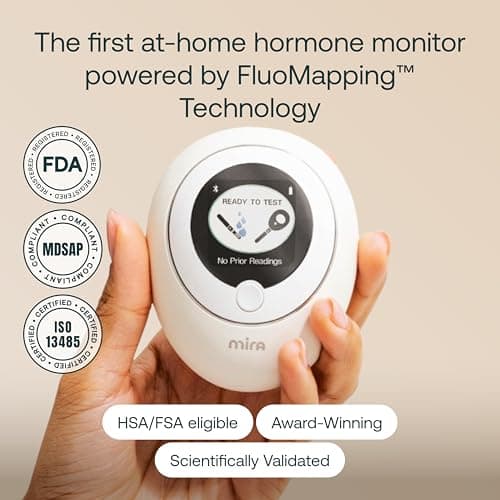
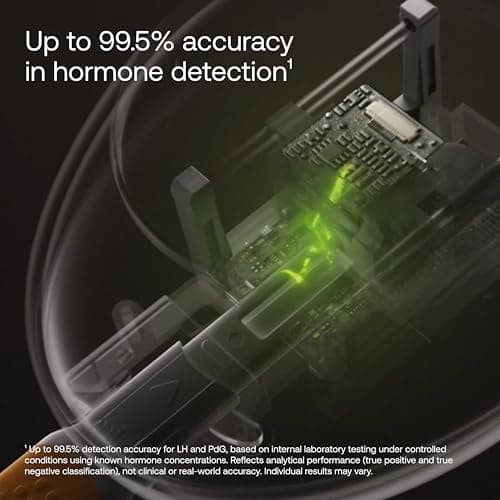
- UP TO 99.5% ACCURACY IN HORMONE DETECTION*. Powered by advanced fluorescent technology, Mira provides scientifically validated hormone concentration data—going beyond traditional test strips that just show lines. Mira shows your hormone levels in numbers.
- AI-POWERED INSIGHTS IN THE MIRA APP. Your results automatically sync to the Mira App (iOS & Android), where an algorithm trained on 30M+ hormone data points tracks your hormone trends, delivers personalized cycle predictions, and provides smarter fertility guidance that improves over time.
Quick Verdict
Pros
- Tracks 4 hormones (LH, FSH, E3G, PdG) in one wand instead of separate tests
- Quantitative fluorescent results rather than subjective line comparisons
- AI-powered app with 30M+ data points improves predictions over time
- Easy-to-share hormone curves for conversations with your doctor
- Includes 30 Ultra4 wands to get started immediately
- Predicts fertile window even with irregular cycles
Cons
- Replacement wand packs cost significantly more than standard OPK strips
- Monitor requires charging—extra step if you're used to passive strip tests
- App required for full insights; results on the monitor alone are limited
- Subscription model for premium app features adds ongoing cost
- Some users report a learning curve interpreting numerical values
Quick Verdict
The Mira fertility monitor is a sophisticated hormone tracking device that goes well beyond the basic LH surge detection of traditional ovulation strips. After three cycles of daily testing, I found the quantitative fluorescent readings genuinely useful for understanding my cycle patterns rather than just predicting a single fertile day. At around $180 with 30 wands included, it's a meaningful investment—but if you're serious about hormone health or actively TTC, the data depth justifies the cost. I'd give it a 4.4 out of 5 for most users, with the main deduction for ongoing wand costs.
What Is the Mira Fertility Monitor?
I first encountered the Mira fertility monitor when a friend who'd been TTC for eight months swore it "changed everything" about how she understood her cycle. Skeptical but curious, I started my own trial during a period when I wasn't actively trying to conceive but wanted to see what all the fuss was about. The monitor arrived in a compact box that felt more medical than I expected—white, minimal, with clear illustrations showing exactly where to click each piece.
Unlike standard ovulation predictor kits that give you a visual line intensity (subjective at best), the Mira fertility monitor measures four hormones quantitatively: LH, FSH, E3G (estradiol), and PdG. You dip a wand in urine, insert it into the monitor, and roughly 16 minutes later you have numerical values. Those numbers sync via Bluetooth to the Mira app, where an algorithm—trained on over 30 million hormone data points—starts learning your patterns.
Key Features
- Measures 4 hormones per test: LH, FSH, E3G, and PdG in a single wand
- Fluorescent detection technology provides quantitative concentration data
- Results in approximately 16 minutes with automatic Bluetooth sync to app
- AI-powered cycle predictions improve with each cycle of data
- Doctor-ready exportable reports for sharing hormone curves with healthcare providers
- Compatible with iOS and Android; no subscription required for core tracking
- Includes Mira Monitor plus 30 Ultra4 Wands in the base kit
Hands-On Review
Setup took about ten minutes—pairing the monitor to my phone via Bluetooth was painless, though I did have to enable location permissions on Android for the sync to work smoothly. By day three of my first cycle using it, I was already glad I'd switched. Here's what caught me off guard: I always assumed my ovulation happened around day 14, based on textbook cycles. The Mira fertility monitor showed my LH surge actually peaked closer to day 16, and my E3G rise started a full week earlier than I'd anticipated.
What surprised me most was the PdG tracking. Progesterone (measured as PdG in urine) confirmation after ovulation gave me confidence that I'd actually ovulated that cycle—not just that LH spiked. This matters for anyone TTC, since an LH surge without subsequent PdG rise could indicate a flawed ovulation event. I showed my hormone curves to my OB-GYN during a routine visit, and she appreciated having actual numbers rather than guessing from temperature charts alone.
The app interface is clean but takes about two weeks to feel intuitive. I bumped into a minor frustration: the monitor itself only displays the current test's numbers. If I wanted to compare yesterday's LH value to today's, I had to open the app. That's not a dealbreaker, but it's worth knowing. Also, the monitor requires charging roughly every 10-14 days with daily testing—a small inconvenience compared to the old strips I could stash in a drawer indefinitely.
Who Should Buy It?
- Women actively TTC who want more than a binary "positive or negative" — the pattern tracking across multiple hormones gives a fuller fertility picture than standard OPKs
- Those with irregular cycles or PCOS — the Mira fertility monitor tracks patterns even when cycles vary, unlike calendars that assume regularity
- Anyone exploring perimenopause or hormone health beyond TTC — tracking E3G and PdG through life transitions provides useful baseline data
- People who want to share concrete hormone data with their doctor — the exportable reports turn subjective symptoms into actionable numbers
Skip this if you're looking for a one-time, low-cost ovulation predictor. The Mira fertility monitor is an ongoing investment—while the starter kit is reasonable, replacement wands run $50-70 for 20 tests. If you only need to confirm ovulation occasionally and have a regular 28-day cycle, basic LH strips will serve you cheaper.
Alternatives Worth Considering
- Clearblue Advanced Digital Ovulation Test — measures estrogen and LH but only 2 hormones; typically less expensive per test, though less comprehensive data
- Tempdrop Basal Body Thermometer — pairs hormone tracking with temperature data for a full fertility awareness approach; works with most apps but requires wearing a sensor overnight
- OVIA Health App + Compatible Devices — offers similar cycle tracking and insights but uses a different ecosystem of compatible third-party devices rather than proprietary wands
FAQ
Standard OPK strips only detect if LH surges above a threshold (showing a line). The Mira fertility monitor uses fluorescent technology to measure actual hormone concentrations in numbers—giving you LH, FSH, E3G, and PdG values. This means you see patterns and trends, not just a binary yes/no on ovulation.
Final Verdict
The Mira fertility monitor isn't for everyone, but for those who want granular hormone data instead of vague strip estimates, it delivers. After three cycles, I appreciated having actual concentration values to discuss with my doctor—something I never got from squinting at faint lines. The upfront cost is reasonable for what's included, but budget-conscious buyers should factor in ongoing wand expenses before committing. If you're actively trying to conceive, navigating irregular cycles, or simply want to understand your hormones in depth, this device earns its place on your bathroom shelf.
Would I recommend it? For the right user—yes, unequivocally. Just go in knowing what you're paying for: not just a fertility monitor, but a data-driven approach to your hormonal health.