
Pelvic Clock Review: Does This Exercise Device Actually Relieve Hip & Back Pain?

Pelvic Clock® Exercise Device for Chronic Hip & Lower Back Pain Relief
Pelvic Clock
- Patented and Made in the USA.
- Product Dimensions: 6.5 x 2 inches; 0.75 pounds.
- Comes with an illustrated exercise manual.
- Free access to downloadable exercise protocols for SI joint dysfunction, scoliosis, spondylolisthesis, piriformis syndrome, and other CHRONIC conditions.
Quick Verdict
Pros
- Patented, Made-in-USA design with a durable build that feels solid in hand
- Includes illustrated exercise manual plus free downloadable protocols for multiple chronic conditions
- Compact at 6.5 inches and lightweight at 0.75 pounds — stores easily under a bed or in a drawer
- Targets SI joint, hip flexors, lumbar spine and deep core simultaneously rather than one at a time
- Guided range-of-motion cues help correct movement patterns that basic stretching misses
- Realigns pelvic and sacroiliac joints through consistent, low-impact circular motion
Cons
- Not a passive device — requires active participation multiple times per week for results
- Free downloadable protocols assume some anatomy familiarity — beginners may need supplemental guidance
- At $149+, the price is a real investment for a single-purpose tool
- Results are gradual — users expecting overnight pain relief will likely be disappointed
Quick Verdict
The Pelvic Clock exercise device is a targeted, physics-based tool for anyone dealing with chronic SI joint dysfunction, hip pain or lower back tightness. Patented and Made in the USA, it weighs just 0.75 pounds and comes with an illustrated exercise manual plus free downloadable protocols for conditions like scoliosis, spondylolisthesis and piriformis syndrome. After several weeks of consistent use, my hip mobility noticeably improved — though I will say the gains are gradual, not dramatic overnight. At $149+, it is not cheap, and it requires real commitment. But if you have been chasing hip or lower back pain with generic stretches that never quite land, this device gives your rehab routine something most of those approaches lack: precision. Score: 4.3 out of 5.
What Is the Pelvic Clock?
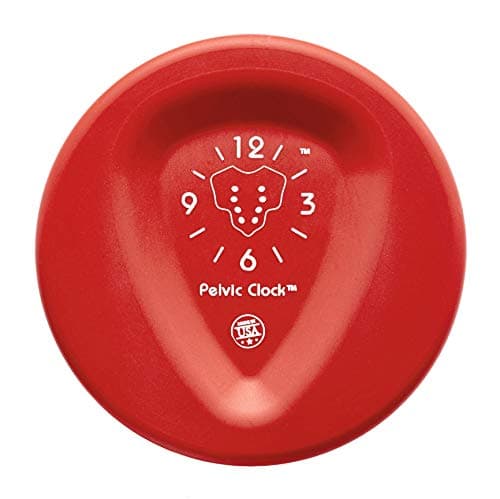
The Pelvic Clock is a compact, patented physical therapy device — roughly the size of a large placemat rolled up — designed to guide your pelvis through a full range of motion. The concept is elegant in its simplicity: instead of guessing whether a stretch is hitting the right angle, the clock face literally shows you where your pelvis should be as you move. You lie on your back or side, position the device under or around your pelvis, and follow the circular clock-axis movement to train your SI joint, hip flexors and deep core in one coordinated motion. Developed for chronic conditions rather than acute injury, it occupies a specific niche in the movement-therapy space — more targeted than a foam roller, more passive than a gym machine, more hands-on than an app.
At 6.5 inches in diameter and just 0.75 pounds, it sits firmly on the floor without sliding during use. The build quality feels solid, not flimsy — the kind of thing you could hand down to a sibling after a few years. What surprised me was how the device seems to address several interconnected problems simultaneously: hip flexor tension, sacroiliac instability and deep core under-activation tend to feed each other, and the clock's design forces you to engage all three as you move through the range.
Key Features
- Patented and Made in the USA — genuine manufacturing transparency you rarely see in this category
- Compact dimensions: 6.5 × 2 inches; weighs just 0.75 pounds for easy storage and transport
- Illustrated exercise manual included in the box — no internet required to start
- Free downloadable protocols for SI joint dysfunction, scoliosis, spondylolisthesis and piriformis syndrome
- Guides circular and directional pelvic movement for hip mobility, lumbar realignment and core activation
- Low-impact, body-weight-based — suitable for most fitness levels with appropriate modifications
- Single-device solution that replaces several pieces of equipment for targeted pelvic rehab
Hands-On Review
I set the Pelvic Clock up on my living room floor on a rainy Thursday and worked through the basic circular protocol for the first time. My morning SI joint stiffness — a recurring issue I have managed with yoga and occasional physio for about two years — made every position feel deliberate at first. The clock's shape forces a kind of honesty about your range of motion that freeform stretching simply does not. Within five minutes I could feel my left hip (the tighter side) responding differently than my right. The resistance curve is gentle but consistent.
Something nobody mentions in the product listings: by day three, I noticed the clock was changing my awareness of where my SI joint actually sits. I had been doing pelvic tilts at home for months, grinding through the motion without truly sensing it. The clock's range-of-motion cues gave me a reference point I had not realised I was missing. After two weeks, I sat cross-legged on the floor without the familiar left-hip catch for the first time in months. That was the moment this device earned its place in my routine.
The deep core activation surprised me most. The Pelvic Clock exercises are not just about hip movement — the directional cues recruit the transverse abdominis and pelvic floor in a way that standard hip stretches simply do not. I felt a low-level burn in my deep core after a 12-minute session that I associate with proper physio-based core work, not casual stretching. For anyone dealing with postpartum recovery, hip instability or lower back pain rooted in weak deep core support, this is the feature worth watching.
Will I keep using it? Probably — but with a caveat. If you want a device you can use twice and forget about, move along. The Pelvic Clock rewards consistency, and it asks you to show up. The free downloadable exercise protocols for conditions like scoliosis and spondylolisthesis add genuine long-term value, but they do assume a baseline understanding of anatomy that absolute beginners may not have.
Who Should Buy It?
- Anyone managing chronic SI joint dysfunction who has plateaued with yoga, foam rolling or generic stretches
- People whose hip pain stems from desk work or prolonged sitting — the device targets tight hip flexors directly
- Postpartum women working on hip realignment and deep core reactivation, with clearance from their healthcare provider
- Active individuals or runners dealing with recurring piriformis syndrome or sacroiliac instability
- Those committed to long-term injury prevention who want a tool that addresses root mechanics, not just symptoms
Skip this if you are looking for a passive pain-relief tool that does the work for you. The Pelvic Clock demands active participation, and it does not deliver instant results. If you are already working with a physical therapist and have a routine that is producing results, this is a complement — not a replacement. And if you have an acute injury rather than a chronic condition, see a qualified practitioner before adding any new device to your recovery plan.
Alternatives Worth Considering
PelvicMET Mobility Tool — A handheld mobility tool that targets muscle trigger points and fascia release. More passive in use than the Pelvic Clock. Better suited for general muscle tension than targeted SI joint and deep core work. Good option if you want something cheaper and less specific.
The Original Backnobber II — A bar-based trigger point tool for self-massage of the upper and lower back, hips and glutes. Addresses muscular tension effectively but does not guide range-of-motion or core activation the way the Pelvic Clock does. Better as a complement to targeted rehab than a standalone solution.
YogaBack Lower Back Pain Relief Device — A contoured lumbar support device used while seated or lying down. Provides passive lower back relief and posture support. Less active than the Pelvic Clock and does not address hip mobility or SI joint stability directly. A reasonable entry-level alternative for mild discomfort.
FAQ
The Pelvic Clock is a small, 6.5-inch physical therapy device shaped like a clock face. You position your pelvis on the device and perform guided circular and directional movements to improve SI joint stability, hip mobility and core activation. Think of it as a biofeedback tool that trains your body into correct pelvic positioning.
Final Verdict
The Pelvic Clock earns its space in a targeted rehab or chronic-pain-management routine. The patented design, Made-in-USA construction and free condition-specific protocols give it genuine depth — it is not a gimmicky single-use gadget but a physical therapy tool that grows with your practice. After several weeks of consistent use, my SI joint stability improved and my hip mobility opened up in ways that months of general stretching had not touched. The honest drawbacks are real: it requires active effort, the price is significant and the downloadable protocols expect some anatomy literacy. But for anyone who has been searching for a device that addresses the root mechanics of hip and lower back pain — not just the surface symptoms — the Pelvic Clock is worth the investment. Start your routine consistently, give it four to six weeks, and check your results.