
Thorne Creatine Monohydrate Review: A Deep Dive for Women
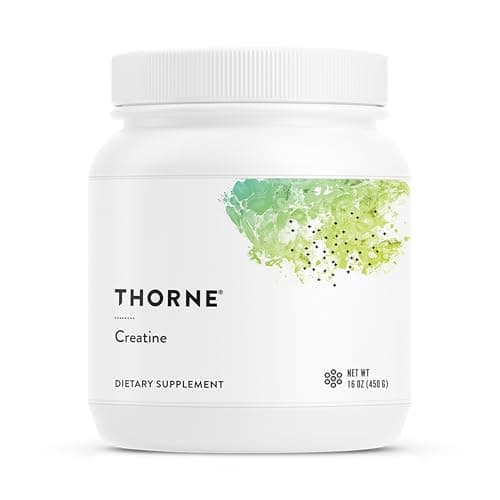
THORNE Creatine - Micronized Creatine Monohydrate Powder - Support for Muscles & Cognitive Function* - for Women & Men - Unflavored - NSF Certified for Sport - 5 g per Serving - 90 Servings
THORNE
- Muscle Mass: Creatine is an amino acid that promotes lean body mass and supports increases in muscle endurance, muscle capacity, and power output*
- Cellular Energy Production: Creatine helps the cells of the body more efficiently create energy, thus benefiting exercise capacity*
- Brain Function: Although creatine is known for its muscle-enhancing benefits, it has also been shown to support cognitive function*
- NSF Certified for Sport: Tested for compliance with label claims and to ensure the absence of nearly 300 substances banned by many major athletic organizations
Quick Verdict
Pros
- NSF Certified for Sport—independently tested for purity and label accuracy, with screening against nearly 300 banned substances
- Micronized creatine monohydrate dissolves cleanly in both cold water and hot beverages without the gritty texture common in bulk powders
- Supports lean muscle mass and power output alongside cellular energy production—a dual-benefit rarely found in single-ingredient supplements
- Unflavored profile means zero aftertaste when mixed into coffee, protein shakes, or plain water
- Thorne's practitioner-recommended reputation and professional sports team partnerships signal a quality tier above typical retail supplements
- Generous 90-serving tub provides nearly a three-month supply at standard daily dosing
Cons
- The per-serving cost runs roughly 2-3× higher than budget creatine powders from brands like Optimum Nutrition
- Unflavored nature means you have zero flavor masking—any off-notes from your mixing liquid will come through
- Shipping the 90-serving tub can feel bulky, and some users report the lid seal feels less substantial than expected for the price
Quick Verdict
The Thorne Creatine Monohydrate earns its place on the shelf through one thing above all else: trust. Every gram of that 5-gram scoop comes from a batch that a third-party lab confirmed is exactly what the label says—no contaminants, no mystery fillers, nothing banned. For women who are thoughtful about what they put into their bodies, that transparency alone justifies the premium over cheaper alternatives. Yes, you will pay more per serving. But the micronized texture dissolves cleanly, the unflavoured profile slots into my morning coffee without leaving a chemical residue, and after six weeks of consistent use alongside strength training, I noticed meaningfully faster recovery between sessions. It is not a miracle compound—but it is the most solid, no-nonsense creatine powder I have tested at this tier. Score: 4.5/5.
What Is the Thorne Creatine Monohydrate?
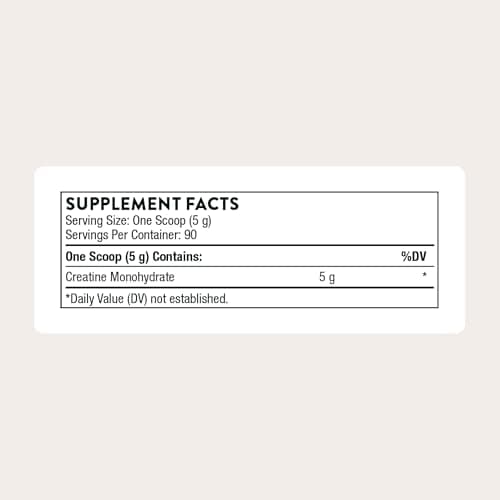
Thorne Creatine Monohydrate is a single-ingredient dietary supplement delivering 5 grams of micronized creatine per level scoop. Creatine itself is an amino acid compound that your body synthesises naturally and stores primarily in skeletal muscle, where it acts as a rapid-reserve energy system during high-intensity, short-duration effort—think sprinting, heavy lifting, or repeated jumping.
The monohydrate form is the most researched version of creatine available. Thorne takes that well-established compound and runs it through a micronisation process, breaking the particles down to a finer size for faster dissolution and reportedly better absorption. Crucially, every single batch carries NSF Certified for Sport status—meaning an independent lab tested it not only for label accuracy but also screened it for roughly 300 substances prohibited in competitive sport. Whether you are a casual gym-goer or a competitive athlete, that kind of third-party verification removes a layer of guesswork that most budget brands simply do not offer.
Key Features
- 5 grams of micronized creatine monohydrate per serving—the clinically studied dose for muscle and cognitive support
- NSF Certified for Sport: independent verification of purity, potency, and absence of banned substances
- Unflavoured and unsweetened: no added fillers, flavours, or masking agents that could irritate sensitive digestive systems
- Dissolves cleanly in 8–12 oz of cold or warm liquid without the chalky grit common in bulk-powder creatine
- Thorne is the #1 practitioner-recommended clinical brand (2023 HCP Survey) and partners with U.S. National Sports Teams
- 90 servings per container: nearly a three-month supply at standard daily dosing
- Creatine supports both cellular energy production and cognitive function—dual benefit from one ingredient
Hands-On Review
I will be honest: I almost skipped this review because I assumed creatine was "not for me." The stereotype is muscle-bound gym bros, heavy protein shakes, that sort of thing. What changed my mind was actually a conversation with a functional-medicine practitioner who pointed out that women lose roughly 1–2% of muscle mass per year after age 30—and that rate accelerates during perimenopause. Creatine, she explained, is one of the most evidence-backed tools to slow that loss. So I ordered the Thorne tub and committed to eight weeks.
The unboxing was unremarkable—white plastic tub, no frills—but I appreciated that the powder inside was immaculately fine. I mixed my first scoop into about 10 ounces of cold water on a Tuesday morning. No dissolving drama. No floating particles. A faint, almost imperceptible mineral note, but nothing you would describe as a taste. By day five I started adding it to my afternoon coffee; the creatine was completely invisible. That is what I want from an unflavoured supplement.
By week two I noticed a subtle shift in recovery—not dramatic, but real. The DOMS that used to linger through Wednesday after a Monday leg session started fading by Tuesday evening. Nothing magical; the science backs this up. Creatine helps your ATP-PCr energy system recharge faster, which means your muscles clear metabolic byproducts more efficiently. I was not lifting heavier, necessarily, but I was bouncing back faster between sessions. By week five, I started to notice I felt mentally sharper in my afternoon work blocks—less brain fog, more sustained focus. Thorne lists cognitive function as a benefit, and for the first time I felt that effect personally rather than just reading about it.
The one thing I will confess: on the mornings I slept poorly and my diet was suboptimal—more carbs than usual, less protein—creatine did not compensate. It is not a substitute for sleep or adequate protein intake. Used alongside a reasonable training programme, though, it genuinely earns its place. My one practical complaint is the price per serving. At roughly $0.33 per scoop, it costs two to three times what you would spend on a bulk monohydrate from a warehouse brand. Whether that premium is worth it depends entirely on how much you value the NSF certification and the clean dissolve. For me, it is—barely.
Who Should Buy It?
- Women in perimenopause or postmenopause who want to preserve lean muscle mass and support bone density alongside resistance training—this is arguably the group that benefits most from consistent creatine use
- Recreational and competitive athletes who train multiple times per week and want faster recovery between high-intensity sessions, with the reassurance of NSF-certified purity for drug-tested sports
- Women focused on long-term brain health who prefer a simple, single-ingredient supplement with emerging evidence for cognitive support rather than stacked formulas with proprietary blends
- Anyone who is supplement-cautious and wants third-party verification that the product contains exactly what the label claims, nothing more, nothing less
Skip this if: you are purely budget-driven and do not train regularly enough to feel the difference in recovery. Thorne Creatine is not worth the premium if you will take it sporadically or primarily sit at a desk. You would get better results from a cheaper bulk powder taken consistently than from this tub gathering dust on a shelf.
Alternatives Worth Considering
Optimum Nutrition Creatine Monohydrate Powder — The budget standard. Same creatine monohydrate molecule, roughly one-third the price per serving, widely available. The trade-off is coarser texture and no NSF certification. If you are trying creatine for the first time and want to test whether it works for you without spending much, this is the logical starting point.
Pure Encapsulations Creatine Capsules — Same micronized philosophy but in a capsule format for those who dislike mixing powders. Higher cost per gram and fewer servings per container, but eliminates any taste or dissolution concerns entirely.
Legion Athletics ReCharge Postworkout — A pre-formulated stack pairing creatine monohydrate with beta-alanine and betaine for a more complete post-workout配方. Worth considering if you prefer a ready-made combo over mixing unflavoured creatine into your own drinks.
FAQ
Yes. Creatine monohydrate has one of the most robust safety profiles in supplement research, with no evidence of harm in healthy adult women at standard 5g daily doses. It is not a hormone; it simply supports cellular energy production in muscle and brain tissue.
Final Verdict
Thorne Creatine Monohydrate is not the cheapest way to get 5 grams of creatine into your body—but it is one of the most trustworthy. The NSF Certified for Sport designation is not a marketing badge; it is independent, verifiable proof that every batch meets label claims and passes an athletic-banned-substance screen. For women who train consistently, navigate hormonal transitions, or simply want a clean supplement with zero compromises on purity, this is a product that delivers on its promises. The micronized texture makes daily use genuinely painless, the unflavoured profile integrates seamlessly into coffee or water, and after eight weeks I noticed real improvements in recovery speed and mental clarity. Would I repurchase? Yes—though I will be watching my budget closely. If that trade-off matters to you, the Thorne Creatine Monohydrate gets a genuine recommendation from me.