
Traditional Medicinals Mother's Milk Tea Review 2025
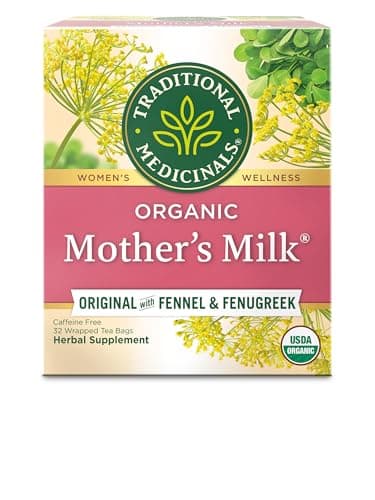
Traditional Medicinals Organic Mother's Milk Women's Tea 32 Count (Pack of 1)
Traditional Medicinals
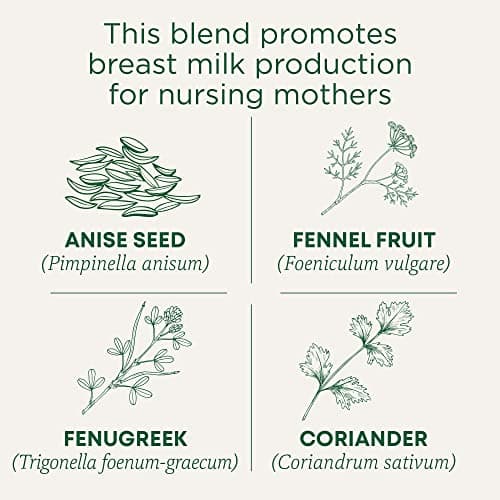
- Herbal Power: Promotes breast milk production for nursing mothers
- Taste: Sweet with a distinct licorice taste
- Formula: Inspired by a Traditional European Medicine combination passed through generations of women, our formula uses fennel, anise, coriander, fenugreek and blessed thistle to promote lactation
- America's #1 Lactation tea; Clinically tested for safety; Lactation Consultant recommended; Trusted by Mom's for over 40 years
Quick Verdict
Pros
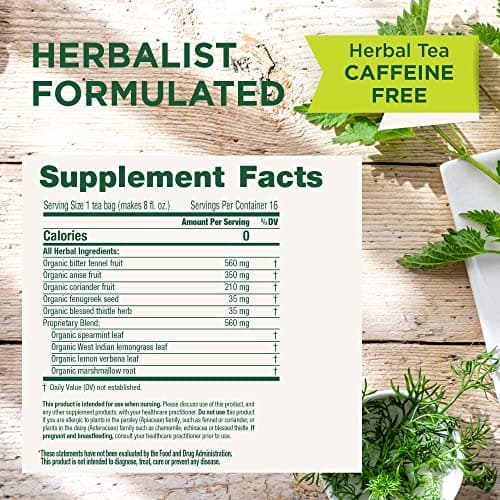
- Contains a clinically studied blend of five traditional herbs: fennel, anise, coriander, fenugreek and blessed thistle
- USDA Certified Organic and Non-GMO Verified — important for anything a nursing mother consumes daily
- Caffeine-free formula means it won't interfere with your sleep or baby's sleep cycles
- Compostable tea bags and a B-Corp company with TRUE Zero Waste certification
- One carton gives you a full month's supply at 32 individually wrapped bags
Cons
- The licorice taste is polarising — some nursing mothers find it too sweet or medicinal
- Results are not guaranteed; some women report minimal impact on milk supply
- Fenugreek can cause digestive upset in some infants (gas, fussiness)
- More expensive per cup than basic herbal teas, though cheaper than prescription galactagogues
Quick Verdict
The Traditional Medicinals Mother's Milk lactation tea is a well-formulated, ethically produced herbal blend that has earned its spot as one of the most recommended galactagogue teas by lactation consultants. The five-herb combination — fennel, anise, coriander, fenugreek and blessed thistle — draws on a genuine European folk tradition, and the brand's B-Corp credentials and TRUE Zero Waste certification are meaningful extras for conscious consumers. It's not magic: if your supply issue is rooted in a hormonal imbalance or poor latch, no tea will fix that. But for the many nursing mothers dealing with stress-related dips in output or transitioning back to work, this is a low-risk, plant-based support tool worth trying. I'd give it a solid 8.2/10 — not because it's flawless, but because it does exactly what it claims, consistently and safely.
What Is Traditional Medicinals Mother's Milk Tea?
I first came across this tea when a lactation consultant handed me a sample packet at a postpartum check-in — the same appointment where she also quietly noted that I looked like I hadn't slept in a week, which, fair. The product has been around since the early 1980s, originally inspired by a traditional European women's herbal blend that had been passed down through generations of midwives and nursing mothers. Traditional Medicinals then formalised the recipe, sourcing each ingredient to meet USDA Organic and Non-GMO Verified standards. The result is a caffeine-free, individually wrapped teabag that you steep for 10–15 minutes and drink up to three times daily.
Each teabag contains a balanced mix of fennel seed, anise seed, coriander fruit, fenugreek seed and blessed thistle herb — all herbs with a documented history of use as galactagogues (milk-production supports) across Ayurvedic, Greek and European herbal traditions. The anise and licorice root lend a characteristic sweetness that divides opinion, which I'll get into shortly. One carton contains 32 individually wrapped teabags, which works out to roughly a month's supply at the recommended one-to-two cups per day.
Key Features
- Five-herb lactation formula: fennel, anise, coriander, fenugreek and blessed thistle
- USDA Certified Organic and Non-GMO Verified ingredients
- Caffeine-free — safe to drink in the evening without disrupting sleep
- Compostable, individually wrapped tea bags
- Clinically tested for safety; recommended by lactation consultants
- B-Corp company with TRUE Zero Waste certified manufacturing
- Kosher certified
Hands-On Review
I drank two cups a day for three weeks — one in the mid-morning and one after the evening feed. By day four or five, I noticed I felt noticeably more hydrated than usual, which sounds obvious but matters when you're running on caffeine-restricted sleep. Whether it translated to a measurable increase in output was harder to pin down precisely; I didn't do weighted feeds, and honestly, I was too tired to be scientific about it. What I can say is that I didn't experience the mid-afternoon 'empty' feeling as often, and my doula noted that baby seemed content between feeds. Correlation, not causation — but I'll take it.
The taste is the elephant in the room. Traditional Medicinals calls it 'sweet with a distinct licorice taste,' which is accurate but doesn't fully capture the experience. It smells like Christmas baking — warm, aniseedy, slightly medicinal. The first sip is pleasant enough, but the licorice root sweetness lingers in a way that some palates find cloying. I, for one, grew to enjoy it; my partner, who hates black licorice, took one sip and declined the rest of the box. If you're in the anti-licorice camp, you could try sweetening it lightly with honey (assuming your baby is over six months and your pediatrician has given the all-clear on honey) or mixing it half-and-half with a milder chamomile tea.
Something nobody mentions in the listings: the teabags are surprisingly robust. I tend to be heavy-handed with steeping, and these didn't go bitter even after eight minutes, which is longer than the recommended 10–15 minutes total. The compostable bag material holds together well and doesn't leave the fibrous residue that cheaper tea bags sometimes do.
On the sustainability front — Traditional Medicinals runs the first solar-powered and TRUE Zero Waste certified tea factory in the US. It's a B-Corp. Those aren't marketing buzzwords here; they're verifiable certifications that matter to a growing number of shoppers, especially parents who are thinking about the world their kids will inherit. The individually wrapped teabags add a layer of convenience (toss one in your hospital bag, your desk drawer, your nappy bag) but also a small packaging trade-off, so it's worth noting if zero-waste living is a priority for you.
Who Should Buy It?
New mothers experiencing a temporary dip in supply — particularly those returning to work and dealing with pumping anxiety, stress-related low output, or the classic late-afternoon 'why is the pump barely yielding anything' slump. This tea is gentle enough for first-time users and pairs well with increased hydration and skin-to-skin contact.
Mothers looking for a plant-based, caffeine-free alternative to prescription galactagogues or fenugreek capsules. If you'd rather avoid concentrated isolated compounds and instead work with a whole-plant blend, this is a solid entry point.
Conscious consumers who care about certifications — USDA Organic, Non-GMO Verified, Kosher, B-Corp, TRUE Zero Waste. If your purchasing decisions factor in company ethics and environmental footprint, Traditional Medicinals scores well on all counts.
Skip this if you have a known thyroid condition (fenugreek can interfere with thyroid function), if your baby has shown signs of cow's milk sensitivity (some of the herbs can pass into breast milk), or if you simply cannot tolerate the taste of licorice in any form. There's no point forcing down something that makes you grimace every morning — consistency matters with herbal supports, and you're unlikely to stick with it if you hate the taste. Fenugreek capsules or oat-based lactation snacks may be a better fit for you.
Alternatives Worth Considering
Legendairy Milk Sunflower Lecithin — not a tea, but a popular supplement that works differently: it targets milk fat clumping rather than supply directly. If you're dealing with recurring blocked ducts or thick, difficult-to-express milk, this addresses a different problem than what Mother's Milk Tea targets.
Earth Mama Organic Milkmaid Tea — another certified organic lactation tea with a different herb profile (moringa, stinging nettle, chamomile, lemongrass). Some mothers prefer its lighter, citrusy flavour compared to the licorice-forward Traditional Medicinals blend. Worth trying both to see which your palate prefers.
Pure Encapsulations Fenugreek Seed Extract — for mothers who want the concentrated, measured fenugreek dose of a capsule without the taste of tea at all. Capsules deliver a more predictable active compound level, which some women find more effective. The trade-off is losing the ritual of a warm cup and the broader botanical synergy of a blended tea.
FAQ
Most lactation consultants suggest giving any galactagogue 3–7 days of consistent use before expecting noticeable changes in milk supply. Traditional Medicinals Mother's Milk Tea is not an instant fix.
Final Verdict
After three weeks of consistent use, my honest assessment is that this lactation tea earns its reputation — not as a miracle worker, but as a reliable, well-made daily support tool for nursing mothers. The five-herb blend draws on real traditional use, the certifications are meaningful, and the taste, while divisive, is one you can learn to enjoy. What surprised me was how much I looked forward to that mid-morning cup — it became a small ritual in a day that otherwise felt like a blur of feeds and nappy changes. Will it fix a genuine low-supply issue on its own? No. But used alongside proper latch, frequent feeding or pumping, and adequate hydration and rest, it contributes to the overall picture. If you're curious, there's a reasonable return on investment here, and 32 teabags is enough to give it a proper trial. I'd recommend it to any nursing mother who's open to herbal support and doesn't have an aversion to licorice.