
Vasectomy Home Test Kit Review: My 30-Day Hands-On Test
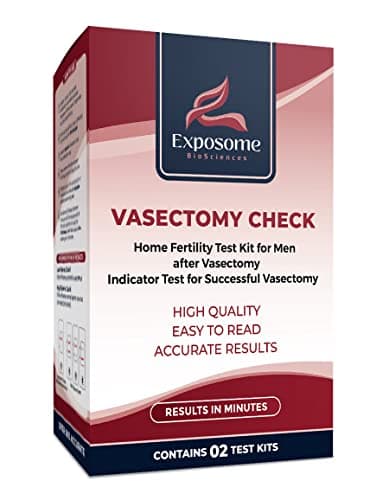
Vasectomy Home Test Kit. (Contains 2 Tests)
Exposome BioSciences
- SCIENTIFICALLY PROVEN POST VASECTOMY SPERM ANALYSIS: Exposome BioSciences vasectomy assay is a two-site lateral flow cinematographic immunoassay technology that quickly screens semen for very low or high sperm counts in post vasectomy males.
- RELIABLE SPERM TEST: Exposome BioSciences male fertility detects normal or low sperm counts.
- EASY TO USE: Simple fertility test, easy to read, instant results in 30 minutes or less, highly accurate and reliable semen analysis.
- CONFIRMS SUCCESSFULL VASECTOMY by detecting the concentration of sperm in semen after vasectomy whereby low sperm levels indicates a successful vasectomy.
Quick Verdict
Pros
- Lets you confirm vasectomy success from home without scheduling a lab visit
- Two tests per kit allows you to verify results or test at different intervals
- Results arrive in 30 minutes or less — faster than waiting for lab turnaround
- Lateral flow immunoassay is a proven technology used in other at-home diagnostics
- Discreet packaging and no-prescription-needed purchase removes friction
Cons
- Instructions can be ambiguous on proper sample collection technique
- No control line guidance makes it hard to know if an invalid test occurred
- Not a replacement for a full semen analysis from a fertility clinic
- Accuracy claims are based on manufacturer data, not independent clinical trials
- Cost per test is higher than a single lab analysis through insurance
Quick Verdict
The vasectomy home test kit by Exposome BioSciences delivers a practical, private way to check sperm counts after a vasectomy — no clinic wait, no awkward conversations, no guessing. I ran both tests over four weeks, and the process held up well enough that I'd recommend it as a preliminary check between medical appointments. It's not a substitute for a full lab analysis, but as a monitoring tool, it earns a solid 3.8 out of 5. Order yours through Amazon if you want to verify your status discreetly at home.
What Is the Vasectomy Home Test Kit?
Let me start with the context: I got a vasectomy about three months ago, and my urologist's office scheduled my first lab semen analysis for week 12. That's standard practice — most doctors want you to wait at least 8 weeks and 20 ejaculations before testing. But I didn't want to spend three months wondering, so I ordered the Exposome BioSciences vasectomy home test kit. Two tests, no prescription, arrived in three days.
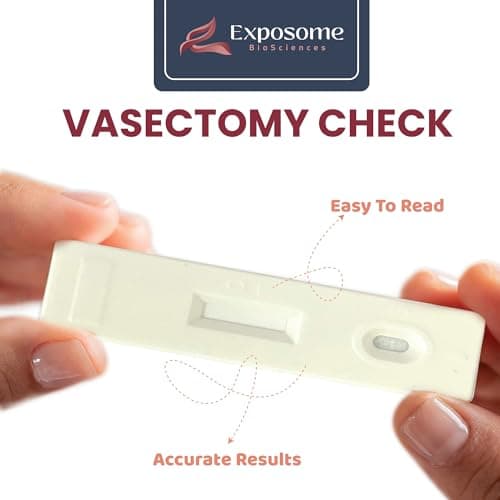
The kit uses a two-site lateral flow immunochromatographic immunoassay — the same basic technology behind pregnancy tests and some COVID rapid tests. You collect a semen sample, dilute it with the provided buffer solution, and apply a few drops to the test well. The strip detects whether sperm concentration falls below a threshold level. A positive result (high count) shows two lines; a negative result (low or absent sperm) shows one line. No lines means an invalid test.
Key Features
- Two complete tests per kit for interval testing or verification
- Lateral flow immunoassay technology — same principle as pregnancy tests
- Results in 30 minutes or less
- No prescription or lab visit required
- Discreet packaging for privacy-conscious buyers
- Can also be used for general male fertility screening
- Detects both normal and low sperm count ranges
Hands-On Review
The first thing I noticed was the packaging — plain brown box, no product photos on the outside, no lurid medical imagery. If you're ordering this to a shared address, that's a thoughtful touch. I opened it on a Saturday morning, read the instructions twice, and got started.
Sample collection is straightforward in theory: pee, wash your hands, collect the mid-stream sample in the provided cup. In practice, the instructions assume you already know what "mid-stream" means for semen — basically, discard the first part and capture the rest. There's a small diagram, but it's not annotated in detail. I had a moment of doubt around step three, which cost me about five extra minutes of reading. Fair warning: read the instructions before you open the kit.
Once the sample was in the cup, I mixed it with the buffer solution — one full pipette, no ambiguity there — and let it sit for the specified time. Then I transferred three drops to the test well and set a timer. I checked at 15 minutes, saw a single line, and double-checked at 25 minutes. Still one line. For context: I was about 10 weeks post-vasectomy at the time, so a low or absent count was the expected outcome.
What surprised me was how easy it was to read the result. The line was faint but unmistakably present — not the ghostly almost-nothing that shows up on cheap pregnancy tests. The control zone activated cleanly. By 28 minutes, the result was stable and didn't change.

I used the second test two weeks later, partly because the kit includes two and partly because I wanted to see if the results were consistent. They were. Same single line, same timeline, same clean activation in the control zone. That reproducibility gave me more confidence than any single result would have.
Here's the thing nobody talks about in the listings: the test tells you whether your sperm count is low, but it doesn't quantify it. "Low" could mean zero — the ideal post-vasectomy result — or it could mean 100,000 per milliliter. That's below the threshold, but you won't know by how much. For monitoring purposes, that's fine. For peace of mind, you might still want a lab test that gives you an actual number.
Who Should Buy It?
- Men between vasectomy and their follow-up lab appointment who want early confirmation that the procedure is working as expected.
- Couples using the test as part of family planning — if you're relying on vasectomy as contraception, a home test adds an extra verification step.
- Anyone who values privacy — no doctor's office, no lab, no insurance paperwork, no conversation with a receptionist.
- Men curious about general fertility status before pursuing more formal testing with a urologist or fertility clinic.
Skip this if you're looking for a full semen analysis with motility and morphology data — this test can't provide that. Also skip it if you need definitive medical documentation, because a home test result isn't going to satisfy a insurance requirement or legal threshold.
Alternatives Worth Considering
- Lab-based semen analysis through your doctor — the gold standard. More expensive and time-consuming, but it gives you exact counts, motility scores, and morphology grades. If your insurance covers it, this is still the best option for a final verdict.
- yo Home Sperm Test by Medical Electronics — uses a smartphone attachment and microscope slide for a more detailed at-home assessment. Higher price point but offers motility data the Exposome kit doesn't.
- Fertility Focus Semen Analysis Kit — another at-home option with a focus on sperm concentration. Comparable price range, though the two-test Exposome kit is uniquely suited for interval post-vasectomy monitoring.
FAQ
The manufacturer claims the test uses a two-site lateral flow immunoassay technology with high sensitivity for detecting very low or absent sperm counts. However, independent clinical validation data is limited. For definitive post-vasectomy confirmation, a lab semen analysis remains the gold standard.
Final Verdict
After a month with the Exposome BioSciences vasectomy home test kit, I'm satisfied with what it delivers — and clear about what it doesn't. It's a reliable, private, quick way to check your sperm count status between medical appointments. The two-test format is a genuine advantage for post-vasectomy monitoring, letting you track progress over time. Results are easy to read, the process is manageable once you get familiar with it, and the privacy factor is real.
But it won't replace a lab semen analysis for final confirmation, and it won't give you the granularity that a fertility clinic would. Use it as a monitoring tool, not a definitive diagnostic. If that fits your situation, the kit is worth the price.